Monday, 26 March 2007

Ribble Coast & Wetlands - the Ribble becomes a Regional Park

The Ribble is one of the most important places in Europe for wildlife… its designation as a Regional Park - the Ribble Coast & Wetlands, officially launched on Friday 23rd March 2007 - is a positive and exciting step forwards in showing how protecting the Ribble’s inter-tidal ecosystem, for now and for future generations, will also boost the local economy.


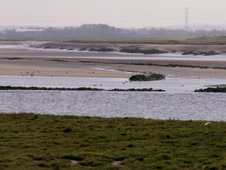
Ribble saltmarsh at Marshside near Southport.

As a Regional Park, offering greater access to the Ribble’s dynamic and irreplaceable habitats, the Ribble will boost income from eco-friendly tourism opportunities by £115 million or more every year…
... and that’s just the new visitors who will be attracted to the Ribble's numerous current attractions, including Marshside Nature Reserve, Ainsdale and Birkdale Sandhills, the Ribble Discovery Centre, and Lytham Nature Reserve, not to mention new reserves in the near future such as Hesketh Out Marsh, the Tarleton to Hesketh Bank Linear Park, and the Sefton Natural Coast, and extensions and improvements to Martin Mere, Longton and Hutton Marshes, and Rufford Old Hall wetlands…

These are just a selection of the existing and newly-proposed eco-tourism opportunities which will form great attractions for the Ribble Coast & Wetlands Regional Park.

Yes, we can put the Ribble at the centre of our thinking without damaging its environmental integrity, or destroying its character, or denying its unique place in local, national, and international terms!

You can read what the World Wildlife Fund says about the economic importance of wetlands.

The Ribble Coast & Wetlands Regional Park will boost eco-tourism opportunities ALL YEAR ROUND as some of the best wild-life watching takes place outside of the traditional holiday season!

The new proposals for the Ribble Coast & Wetlands (RCW) also include fantastic new access routes for walking, cycling, and horse-riding, which will all become part of an intricate, accessible and dynamic North West Coastal Trail…


North West Coastal Path, Freckleton Pool.

…such as the Lancashire Coastal Way (some of which is already open), North West Coastal Path and the Sefton Coastal Path (again, some already completed), the Regional Coastal Trail, a foot/cycle/bridle bridge over the River Douglas, the Burscough to Banks Wetland Walk, the RCW Regional Park Cycleway, the Fylde Coast Cycleway, Lancashire Cycleway, the Trans Pennine Trail, and the Preston Guild Wheel (which will also link in to several other walking and cycling routes), all linking in with the Ribble Way, the Douglas Way, existing footpath networks, and the Southport to Preston National cycling route…

With the huge new Wetland Nature Reserve at Brockholes now in the pipeline – thanks largely to local people helping the Wildlife Trust save this fantastic wetland resource from building developments! – Preston itself also has a lot to offer the Ribble Coast & Wetlands Regional Park…

Brockholes Wetland, a Reserve in the making...


The Ribble Green Belt and floodplain - and a fantastic cycleway - between Fishwick Bottoms and Brockholes.


…and if the redevelopments of Preston Docks and Avenham & Miller Parks are undertaken in a sensitive and eco-friendly manner, these will be just some of the ways Preston can contribute positive and environmentally-sensitive attractions to the Ribble Coast & Wetlands network...


Reinstating the canal links in Preston itself, along with improvements to the Docks, are two ways in which the Riverworks scheme can make positive rather than negative contributions to the Regional Park, based as it is on preserving and enhancing the Ribble’s dynamic and Internationally-significant wetland ecosystem…
- but the other Riverworks proposals of barraging the Ribble and building massive housing and business developments on its floodplain and Green Belt areas clearly contravene the whole Regional Park raison d’etre as both of these proposals would interfere with the Ribble’s irreplaceable inter-tidal ecosystem on the one hand, and reduce its green infrastructure on the other.

The damage the barrage alone would cause to the Ribble’s inter-tidal ecosystem, by interfering with the natural free-flows of silts and nutrients, fresh and salt waters, which form the life-blood of this wildlife ecosystem, has been extensively covered on the Save The Ribble blog, and is evidenced in the huge damage caused by similar schemes around the world, such as the Glen Canyon Dam on the Colorado River in the Grand Canyon, where:

‘Ninety-five percent of Grand Canyon's sediment and nutrients are trapped behind Glen Canyon Dam. Organic materials mixed into this sediment used to provide the fertilizer for the river ecosystem's health. Instead, the Colorado River in Grand Canyon now runs clear and cold, allowing the green alga cladophora to grow and replace the natural warm-water food web. The absence of replenishing sediment is also causing critical beach and sandbar habitat to disappear, and undermining the stability of archaeological sites…’


The Ribble's silts - the life-blood if its wetland ecosystem - clearly visible at low tide washing downstream between Penwortham and Preston.


The confluence of the Douglas into the Ribble, and the silt-rich mudflats exposed at low tide.


Rich inter-tidal Ribble mud.

The WWF point out that:

'wetlands are economically valuable biomes that provide goods and services upon which many communities and economies depend. Recognizing the economic importance of wetlands in addition to their biodiversity, scientific value, climate regulation, potential tourism, socio-cultural and other important wetland values is yet another good reason to reverse global wetland loss...

Dams disconnect rivers from their floodplains and wetlands. The damage to freshwater ecosystems can be devastating. They impact on the migratory patterns of fish, and flood riparian habitats, such as waterfalls, rapids, riverbanks and wetlands.

By slowing the movement of water, dams prevent the natural downstream movement of sediment to deltas, estuaries, flooded forests, wetlands, and inland seas, affecting species composition and productivity.


Dam operations also influence water quality. Water and sediment retention affect water quality and the waste processing capacity of rivers (the ability to break down organic pollutants). This could lead to production of toxic hydrogen sulphide gas that further degrades water quality.'

This is why it is so important that we do not endanger the Ribble's ecosystem by allowing any kind of dam, barrage, weir or barrier to be built, merely for the sake of a 'Water Sports Park'.

As it is, Preston Docks and Marina already bring much boating and sailing traffic through the Ribble Link, connecting Lancaster Canal to the inland waterway network south of the River Ribble – and all without the necessity of a barrage.
So boating folk have to wait for the tide, as they have done for centuries… but this is part of what boating is all about, an intricate relationship with the tides, weather and moods of the river and the sea, and it is clearly not worth the enormous risk to the Ribble’s delicate and irreplaceable inter-tidal ecosystem to interfere with its natural inter-tidal behaviour just so that boats can pass through without having to wait for the tides…


Just some of the traffic at Freckleton Pool


Freckleton Naze just downstream of where the Pool meets the Ribble.

If the perpetual blue-green algal blooms in the Dock basin can finally be solved (as much work done by the Environment Agency and partners bring the hope that it might be in the future), then the Docks could be utilised far more than just providing an idle mooring-space for boats and a back-drop to the weekly shopping as they do at present…

At the launch of the Ribble Coast & Wetlands, Laurence Rose, Regional Director of the RSPB, said that designating the Ribble a Regional Park enables long-term thinking to protect the most important single river estuary in Britain – which supports in the region of 1 million birds all year round - at the same time as promoting coastal tourism throughout the year which will bring in an extra £115 million to the local economy from new visitors.

So, the Internationally-significant numbers of bird species the Ribble supports every winter – 16 species in Internationally-important numbers - between 250,000 and 350,000 birds (including 70,000 Wigeon, 36,000 Dunlin, 34,000 Knot, 30,000 Pink-Footed Geese, to name but a few…) is more than the combined human population of Preston and South Ribble…

All year round, the Ribble supports more birds than the combined human populations of Preston, South Ribble, the Fylde, West Lancashire, Blackpool, Wyre, Chorley, the Ribble Valley… in fact, almost as many birds depend on the Ribble’s inter-tidal ecosystem as there are people in the whole of Lancashire… and the human population of the North West as a whole also benefits from the quality of life the Ribble’s ecosystem brings on every level.


Ribble inter-tidal ecosystem supports wildlife and human communities.


Michael Jack, MP for the Fylde, gave a keynote speech at the launch of the Ribble Coast & Wetlands, in which he pointed out that seeing the river as a divide between communities shows a dangerous lack of understanding of the importance of the Ribble to the environment and to our communities.

He went on to say that only by understanding what a rich treasure-house the Ribble is in biodiversity terms can we ensure we say “YES” to developments which improve our access to the Ribble, and “NO” to others which will damage this unique environment.

Michael Jack has made it clear he is very concerned about the impacts of a barrage on the Ribble, and has been working hard to ensure that Environment Agency advice AGAINST building developments on the flood plain are adhered to by local councils and other developers…

The Ribble Coast & Wetlands Regional Park aims to protect and improve this unique and irreplaceable environment, and the quality of life for local communities. This will be by improving access and facilities for local people as well as create fantastic eco-tourism opportunities... and by protecting the Ribble’s wetland habitats, this will protect and enhance the quality of life – and flood protection – these also bring to local communities.


Long Live the Ribble Wild!


You can read more about the Ribble Coast & Wetlands Regional Park here and here.

You can contact me at savetheribble@tiscali.co.uk

Monday, 5 March 2007

Signs of Spring by the Riverbank

It's very early in March and there are definite signs of Spring by the Riverbank...


3rd March, Avenham and Miller Park.

Mind you, if Spring is off to an early start it's likely to be because this Winter has been exceptionally mild, and we've seen far more of this...


Winter 2006-07

than this...!

Last Winter, 2005-06, Preston Junction Local Nature Reserve, Penwortham.

There are already birds singing in full voice everywhere - and they have been for a good few weeks now...


Blue tit in the Willow catkins


The new shoots on the riverbank, and in the meadows and woods are definately springing...


Aconite...


and Bluebell shoots are well-established, and the daffodils are bursting with colour...

and our local Goose found herself with a visitor this last week - a Canadian Goose dropped by and they spent a good while together by the riverbank...

Although she's on her own again now, waiting for the right guy to call by...

Her friend the young swan is more than happy to reflect on her own image, mind you, obviously well-pleased with the transition !


The rains this Winter have often meant that even low tide has been leaving less of the mudflats exposed for less time, but enough have been exposed for enough time between tides that the Ribble's super-rich silts have ensured between 250,000 and 350,000 over-wintering birds have survived the Winter...


Silt-laden waters, the life-blood of the Ribble, rush downriver at low tide to replenish the mudflats which line the river.
From the Old Tram Bridge through to Old Penwortham Bridge here, to Broadgate and Penwortham, to Priory Park, and beyond to the Estuary...


Low tide from Old Penwortham Bridge showing mudflats on the Penwortham and Broadgate sides, always busy with Black-Headed Gulls, Teal, Mallard, Redshank, and many other species all through the Winter months.

All the birds, local and migratory, rely on what delicious invertebrates and other delights that the mud and nutrients of low tide brings - not minding about the bicycles-on-the-side it seems...

The young swan on the Penwortham mudflats behind Margaret Road...

It's time both councils got together and organised a low tide clean-up once every few months or so as the rubbish mounts up.

The spring air and spring sunshine uplifts the spirits - let's hope winter doesn't have too serious a last blast over the coming weeks as the birds are definately nest-building now after so many mild weeks.


The elder buds are bursting forth...

and the spring wind blows through the willows...


... prompting a certain gentleman to do a spot of spring cleaning...


but 'spring was moving in the air above and in the earth below and around him, penetrating even his dark and lowly little house... It was small wonder, then, that he suddenly flung down his brush on the floor... Something up above was calling him imperiously, and he made for the steep little tunnel... and scrabbled and scratched and scraped... till at last, pop! his snout came out into the sunlight...


"Hang spring cleaning!"

and he found himself rolling in the warm grass of a great meadow...


...The sunshine struck hot on his fur, soft breezes caressed his heated brow, and... the carol of happy birds fell on his dulled hearing like a shout... "This is fine!" he said to himself. "This is better than whitewashing!"'

And the other local riverside residents are also called out of doors by the spring wind, sunshine and birdsong...


...which are joining in with the Ribble waters endlessly rushing by...


Low tide in Broadgate and Penwortham... click to enlarge the picture and see if you can spot the Redshank...

'..."And you really live by the river? What a jolly life!"
"By it and with it and on it and in it," said the Water Rat. "It's brother and sister to me, and aunts, and company, and food and drink, and (naturally) washing. It's my world, and I don't want any other. What it hasn't got is not worth having, and what it doesn't know is not worth knowing..."'

Reigh Belisama savetheribble@tiscali.co.uk

Tuesday, 20 February 2007

Ribble Winter Wonderland

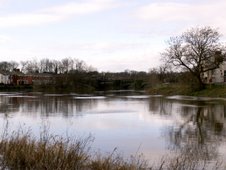
The River Ribble: A Winter Wonderland.


Out over the Estuary at Marshside near Southport in cold Winter sunshine, the Ribble's Wetland habitat is one of the last great wildernesses in Britain - and home to huge numbers of bird species on an Internationally significant scale.
The Ribble currently supports at least as many bird species - if not more - than both Morecambe Bay and the Wash, despite the enormous difference in size.

And it's all because of this stuff...


Mud, mud, glorious mud... full of nutrients which feed the enormous numbers of invertebrates which live in it - and therefore feeding the bird species which live on the Ribble all year round - as well as providing protected nursery sites for fish fry before these are big enough to cope with the open seas.
Because the Ribble's saltmarsh and mudflats are natural and effective absorbers and diffusers of the sea's tidal energy, these areas also protect the surrounding inland areas from flooding.

The Ribble's rich intertidal habitat is a delicate and unique balance created by the inter-relationship between the organic sediments (clay and organic matter) washed down the Ribble (and down the Darwen into the Ribble) and the sandy sediments washed in from the Irish Sea, mixed together by the swirling mixture of saline tides and fresh river water before being deposited across the whole Estuary - as well as on those mudflats in the tidal areas of the River which are also subject to the sea's tidal influence.

The resultant mudflats and saltmarsh have a strong mineral base which is very rich indeed in terms of nutrients - which is why it supports such a huge range of invertebrates that their numbers are practically incalculable...
Sand Hoppers alone are resident in the Ribble's mud in the region of anything between 50,000 to 400,000 per square metre... then you have various species of Snails, Lug Worms, Cockles, and zillions of other invertebrate and shell fish species, all happily living together in the Ribble's rich mud - and incidently feeding hundreds of thousands of birds!

That's why the Ribble's intertidal mudflats and saltmarsh have more energy per square metre than Rainforest...
... and these intertidal habitats are also more rare than Rainforest.


Thousands of Pink-Footed Geese fly in to the Ribble at Marshside and nearby Martin Mere from Iceland for the winter months. Listening to their excitement when they arrive is absolutely fantastic and well-worth a trip to experience.
They will be getting ready to fly back to their Northen breeding grounds soon and the RSPB are having special walks out to see them on March 4th, although you can take a trip to Marshside at any time, all year round, to see a wealth of the Ribble's bird species.


Ribble Saltmarsh - an endangered habitat, rarer than rainforest, essential wetland habitat for birds, fish, invertebrates, and rare plants... and also essential and effective flood defences for the Ribble's human communities.

Saltmarsh is also a vital habitat for a number of our countryside birds, many of which are in national decline, including Skylarks who breed on the saltmarsh during the Neap tides aroung the Summer Solstice and eat the saltmarsh seeds - and Marshside is the best place in Lancashire for these thrilling birds.

Merlin, Peregrines, Barn Owls, Hen Harriers, and Natterjack Toads also inhabit the Ribble's intertidal areas.


Hundreds of Shelduck on the Ribble saltmarsh at Marshside, just one of the many bird species who over-winter on the Ribble. The Ribble supports over 1/4 million birds every winter, which is why it is the most important Estuary River in Britain, if not Europe. Many of the Ribble's bird and fish species are also declining in numbers, or are rare and even endangered species on a global scale, including birds such as Redshank, Pintail, Mediterranean Gull, and Black-Tailed Godwit, and fish species such as Atlantic Salmon (the 10th most threatened animal species in europe) and Sea Trout.

The overwintering bird species account for roughly half of the total number of birds who live on the Ribble all year round - so approximately as many as half a million birds are feeding, breeding, raising their young, moulting, and generally having a wild life on the Ribble every year.


Lapwing, Black-Tailed Godwit and Greenshank just some of the enormous numbers of wading birds and wildfowl to be seen at RSPB Marshside.


Low tide reveals an old causeway out on the Estuary at Marshside: always check at the RSPB Reserve Hide for the times of the tides before you walk out this far as the incoming tide is very fast and can be deadly.


The beauty and importance of the Ribble's Wet Wonderland extends throughout its 75 miles. Whilst it is the Estuary which is a Special Protection Area under the Conservation (Habitats &c) Regs 1994, the EU Birds Directive, and the International RAMSAR Convention - as well as being a SSSI, Biological Heritage Site, and National Nature Reserve - the River is, of course, an ecosystem, and is therefore also recognised as a Biological Heritage Site throughout its length, even before it opens out into the Estuary.

The point where the Ribble opens out into the Estuary is where the Ribble leaves the last point of its narrower River channel as it runs down between Preston on the north bank and Penwortham, South Ribble, on the south bank.
Yet this part of the river is still part of the Ribble's intertidal habitat as the tide progresses 11 miles inland from the sea. As such, this part of the Ribble is as subject to the dramatic changes of the tides and seasons as the Estuary itself, and also has its fair share of over-wintering Wading birds and other wildfowl, feeding on the tidal mudflats which extend as far inland as the Old Tram Bridge which runs between Avenham Park in Preston and Penwortham.

This is why the Ribble Shoreline Management Plan now extends as far inland as Old Penwortham Bridge, which connects Broadgate in Preston to Middleforth in Penwortham, this point - the Middle Forth - an ancient ford across shallow waters at low tide before the bridge was built here in the 1700s.


Old Penwortham Bridge at low tide...


Low tide from Old Penwortham Bridge on a cold but sunny winter afternoon: some of the best mudflats in these largely urban areas are to be found here on the Broadgate side, as well as on the Penwortham side from Priory Park below St. Mary's Church and Penwortham Castle and Motte, stretching upriver as far as the Old Tram Bridge at the furthest end of Avenham Park.

These flats change with each tide: thick mud one day, sandy shores the next, or washed down to shingle beaches by spate waters the next... yet regardless of what the tides and river waters bring, they are inevitably busy with any numbers of birds such as Black-Headed Gulls, Mallard, Cormorants, Redshank, Teal, and even the local Crows and Magpies will pop down for a snack at low tide.


Footprints in the mudflats - a thin skim of mud over a sandy shore on this occasion...


Ribble silts clearly visible washing downriver at low tide, replenishing the Ribble's vital mudflats and saltmarsh habitats every day twice a day, as they have done for many thousands of years...

The Ribble's tidal nature also means it is an endlessly changing and beautiful landscape for its human communities...


Old Penwortham Bridge, a misty winter morning in January on a gently retreating tide.


A clear winter afternoon, high tide coming in...


From Old Penwortham Bridge during rains...


... and gentle currents on a late winter afternoon...


...the same spot as the tide goes out, the Ribble waters rushing over the ancient rock forms of the river bed...


Prehistoric Ribble riverbed at very low tide from on Old Penwortham Bridge...
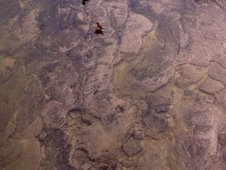
A close view of the beautiful patterns in the fossilised mud upon which Old Penwortham Bridge was built in 1759 - the second attempt at a permanent river crossing here at Middleforth as the first bridge, which was built in 1752, collapsed into the Ribble shortly after it was built only seconds after the local vicar had crossed it, so the story goes...
before a bridge was built here, local people could only cross at low tide, although there was still a ferryboat just a few metres upriver until the last century.


Old Penwortham Bridge on a clear winter's day...


...and during rains...


Spate waters through Penwortham and Preston...


A winter dusk, calm waters...

There's the view, and then there's the wildlife...!


Redshank in Broadgate: now is an excellent time to look out for these shy birds.
Take a walk along the Ribble in Penwortham and Broadgate, particularly the stretch between the Penwortham flyover and the Tram Bridge and you are practically guaranteed to spot these birds over the winter months. This one was amongst a significant number who can be seen almost daily in Broadgate and Middleforth around the Old Penwortham Bridge.

Redshank merge in very well with the mudflats and shingles banks though so look very carefully and don't let them see you - although hearing their echoing cry as they fly away is almost worth their taking flight!


Birdwatching on the way across Old Penwortham Bridge from Penwortham to Preston. The new Victorian-style "gas" lamps look very elegant...


Redshank from that very spot...


Black-Headed Gulls at low tide enjoying the winter sunshine and forming beautiful patterns as they follow the contours of the riverbed mud between Broadgate and Penwortham. The ferryboat used to run just upriver (right) from this point.


Frosty morning in Penwortham...


A chill, damp and misty day by the Ribble has its own beauty, and still draws many Ribblesiders out of doors to enjoy the peace and tranquillity of the River and Green Belt areas.


Resident Goose on the Ribble at the stretch between Broadgate and Penwortham: there was a whole family until last Winter, 2005-6, when the three adults disappeared overnight, leaving this luckily old-enough to survive youngster on her own.


Ribble riverbanks in Winter provide much needed protection from the elements, and abundant food in the mud...
Marshgrasses and mudflats for our resident River birds and our Winter visitors from Iceland, Northern and Eastern Europe, Russia, and even the Arctic circle. Many of these species are also in decline, both nationally and internationally - some very seriously - due to habitat loss...

A Ribble Winter landscape, from Penwortham towards Broadgate at the mudflats next to the Railway bridge crossing to and from Preston Station.

The Penwortham mudflats are a vital resource for resident and over-wintering birds alike - and even many Mallard also fly here for from their breeding grounds in Northern Europe and Russia to join our resident species for the Winter months.


Goosander and Mallard... from the ordinary...


to the unusual...


Great Crested Grebe on the incoming tide between Broadgate and Penwortham...


Female Goosander at low tide, Walton le Dale...


Mallard at the still waters of high tide...


Winter food and habitats provide essential living-space for hedgerow and farmland birds who live on the Ribble's Green Belt areas. Many of these birds are resident all year round, and many are migratory species who travel for thousands of miles from Southern Europe, Scandanavia, and Africa (including crossing the Sahara Desert) to breed here in the Summer months.
Many British hedgerow and farmland birds have declined by approximately 50% in recent decades - but some species, such as Tree Sparrows, by over 80%. We need to protect their habitats as a matter of urgency.


A fabulous willow inhabits the Ribble's banks near Priory Park in Penwortham.


Male Great Tit chirping away - many birds think it's Spring already with the unseasonably warm weather. We have seen a Black-Headed Gull who already has his distinctive black cap breeding plumage amongst the still black eye-browed winter plumage of his fellows; a pair of Magpies and Great Tits building nests; Dunnock flashing their wings at one another; and two Swans courting in Broadgate, with wings beautifully curved and arched love-heart necks.


Greenfinch amongst the many farmland and hedgerow species who inhabit the Penwortham Green Belt opposite Avenham and Miller Parks. This is a wonderful area to explore all year round, full of a diverse range of wildlife habitats from riverbanks and scrubland, to meadows, woodlands, grasslands, streams and ponds.
We must preserve these vital wildlife habitats for now and for future generations.

You can contact Reigh Belisama at savetheribble@tiscali.co.uk